SaaS burn rate and runway: how many months of cash do you actually have?
How runway is actually calculated from cash, burn rate, and revenue growth — and why a single burn-rate number understates risk.
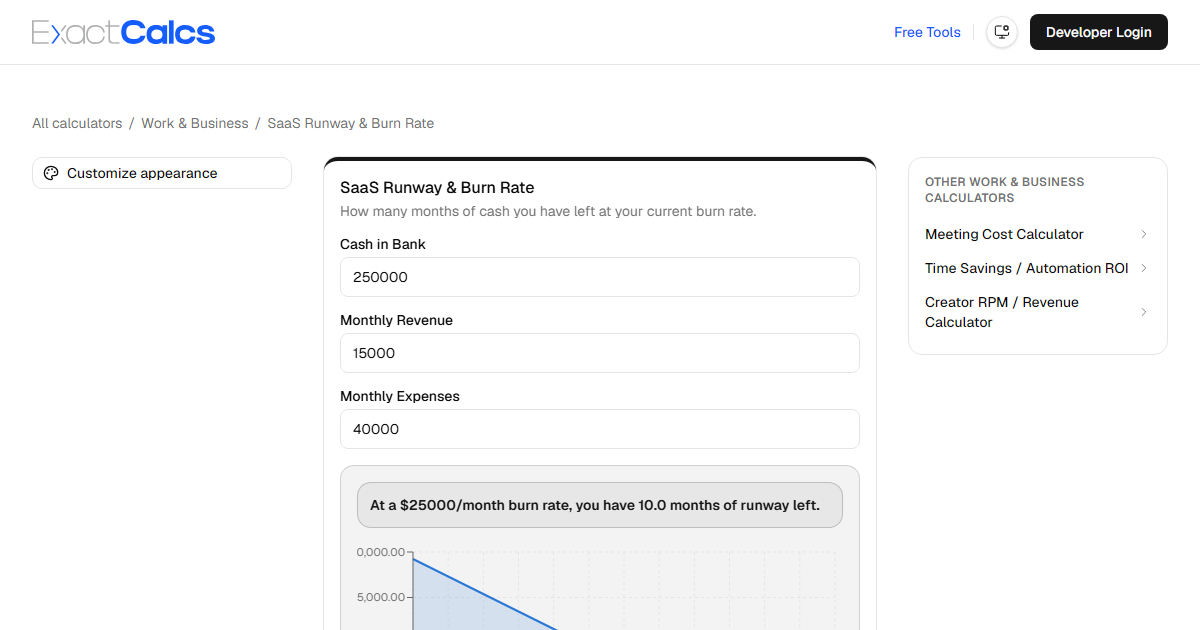
Runway in months = current cash ÷ net monthly burn. A startup with $600,000 in the bank losing $50,000/month has 12 months of runway — but that single number hides whether burn is shrinking, flat, or accelerating, which changes what "12 months" actually means for planning.
Gross burn vs. net burn
Gross burn is total monthly cash spend. Net burn subtracts revenue: net burn = gross burn − monthly revenue. Runway should always be calculated from net burn — a company spending $80,000/month with $30,000/month in revenue has a net burn of $50,000, not $80,000, and using the wrong figure over- or understates runway by the exact revenue amount.
Why a flat burn-rate number understates risk
Runway calculated from last month's burn assumes burn stays constant, but most growing SaaS companies' burn rises as headcount and infrastructure scale — so a naive "cash ÷ current burn" figure is usually an overestimate of actual runway unless burn is intentionally being held flat. Modeling burn as a trend (this month vs. 3 months ago) gives a materially different, usually shorter, real answer.
Worked example
- Cash on hand: $900,000
- Current monthly gross burn: $110,000, growing ~5%/month
- Monthly revenue: $35,000, growing ~8%/month
- Flat-burn runway estimate: $900,000 ÷ $75,000 net burn ≈ 12 months
- Trend-adjusted runway (burn growing faster than revenue): closer to 9–10 months
The 2–3 month gap between the two estimates is exactly the kind of thing that determines whether a fundraise starts with 6 months of buffer or 6 weeks.
Model your own numbers
The SaaS runway calculator takes cash, burn, revenue, and growth trends and returns a runway estimate that accounts for the trajectory, not just a single month's snapshot.