How many months of expenses should an emergency fund actually cover?
3 months, 6 months, or something else — how to size an emergency fund to real, variable monthly expenses instead of a rule of thumb.
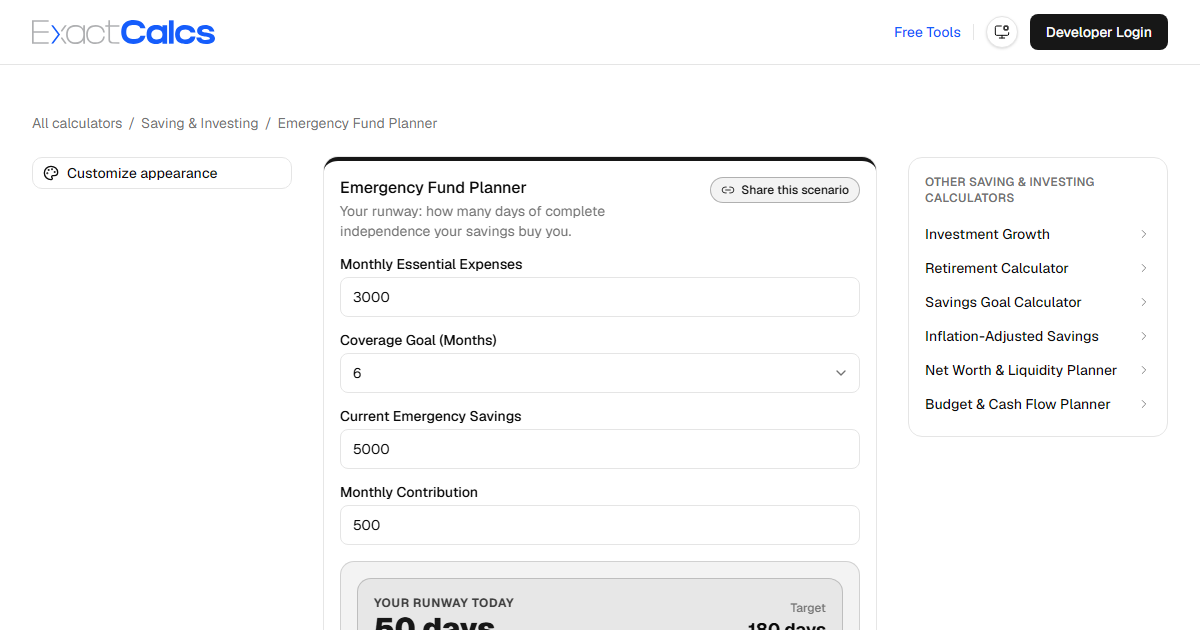
3 months of essential expenses is a reasonable floor for a stable dual-income household with in-demand skills; 6 months is the more common general recommendation; and single-income households, freelancers, or anyone in a volatile industry are usually better served by 9–12 months. The "right" number is a function of income stability, not a fixed rule.
Why the range is so wide
The purpose of an emergency fund is to cover essential expenses during an income gap — the size of the gap it needs to cover depends entirely on how long re-employment or income recovery realistically takes for that specific situation. A salaried employee in a low-unemployment field with a working spouse faces a much shorter realistic gap than a commission-based freelancer supporting a household alone.
Expenses, not income
The target should be based on essential monthly expenses (housing, utilities, food, insurance, minimum debt payments) — not gross income, which is usually higher than what's actually needed to survive an income gap. Using income instead of expenses as the base typically overstates the real target by 20–40%, depending on savings rate.
Worked example
- Essential monthly expenses: $3,200
- 3-month fund: $9,600
- 6-month fund: $19,200
- 12-month fund: $38,400
For most households, 6 months ($19,200 in this example) is the balance point between real protection and not over-allocating cash that could otherwise be invested.
Where to actually put it
An emergency fund's job is availability, not growth — a high-yield savings account, not a brokerage account, is the standard place for it, specifically because it needs to be accessible without a market-timing risk during the exact moment it's needed.